
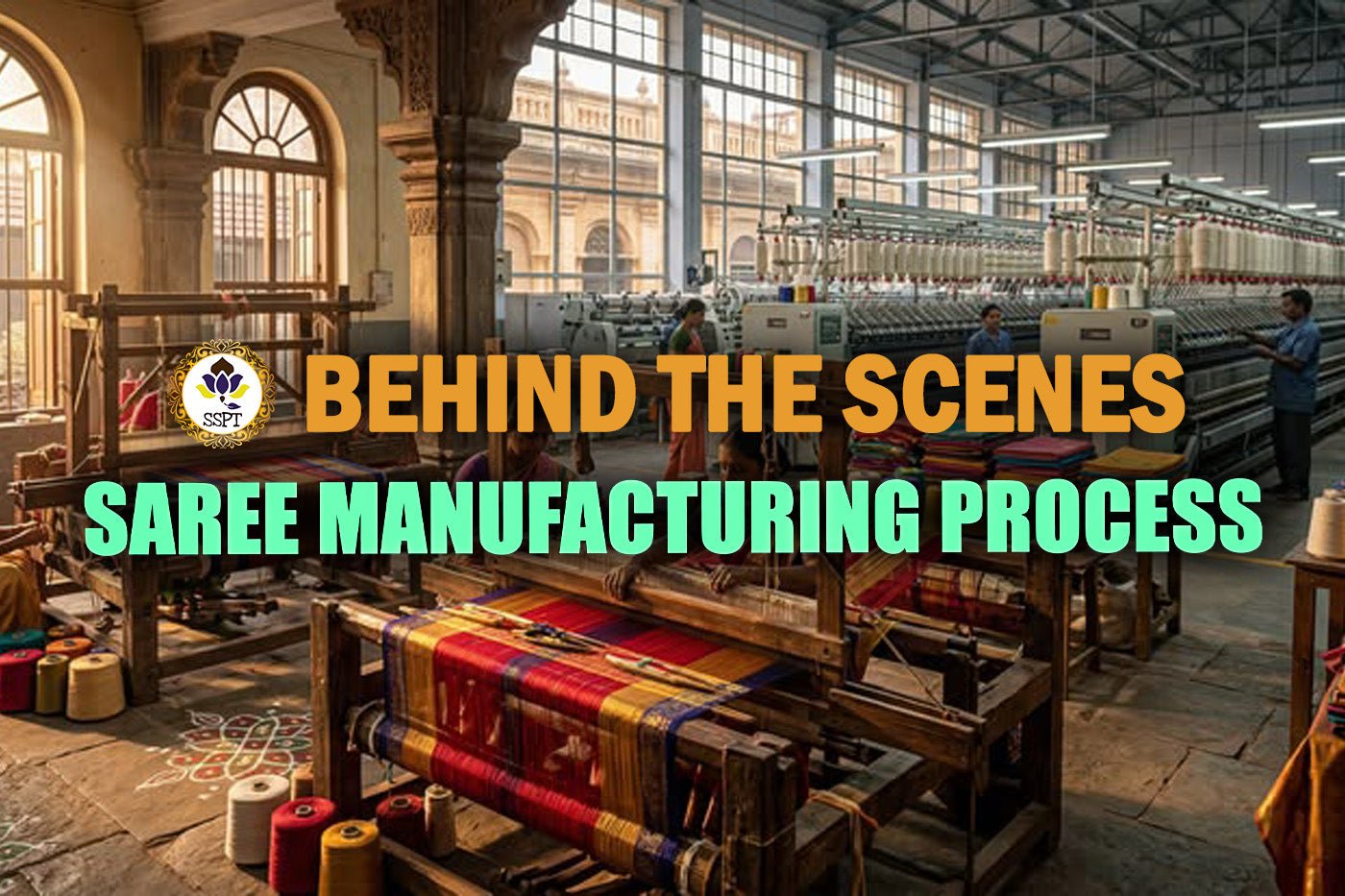
Behind the Scenes: Saree Manufacturing Process
At Sri Sakthi Pugazh Tex, we believe every woman deserves to know the journey behind her favorite outfit. In this blog, we take you behind the scenes of the saree manufacturing process. You will learn how raw yarn transforms into the elegant sarees you love to wear.
By the end of this article, you will understand the craftsmanship, care, and dedication that goes into every saree. You will also learn how to choose the right saree and take care of it properly.
Let's dive in.
Why Understanding the Saree Manufacturing Process Matters
Many women buy sarees without knowing how much effort goes into making them. Understanding the process helps you:
- Appreciate the true value of a saree
- Make smarter buying decisions
- Support genuine, quality-driven brands
- Understand pricing better
- Choose fabrics that match your lifestyle
When you know the story behind the fabric, shopping becomes more meaningful.
The Complete Saree Manufacturing Process
Making a saree is not a one-step task. It involves several stages, each requiring precision and patience. Here is a simple breakdown of how sarees are made.
1. Selecting the Raw Material
Every saree begins with raw fiber. This can be cotton, silk, or a blend of both. The quality of the fiber decides the final feel, durability, and shine of the saree.
- Cotton is soft, breathable, and ideal for daily wear
- Silk offers a rich texture, perfect for weddings and festive occasions
- Blended fabrics balance comfort and elegance
Choosing high-quality raw material is the first step toward creating a long-lasting saree.

2. Yarn Preparation
Once the raw fiber is selected, it goes through spinning. This process turns raw fiber into fine yarn. The yarn is then dyed using natural or chemical dyes, depending on the design requirement.
- Dyeing gives the saree its color and vibrancy
- Even dyeing ensures uniform shade throughout the fabric
- Skilled workers check yarn strength before weaving begins
This stage sets the foundation for the saree's final look.

3. Designing the Pattern
Before weaving starts, designers plan the pattern. This includes borders, motifs, and the overall layout of the saree.
- Traditional designs reflect regional culture
- Modern patterns cater to contemporary fashion trends
- Designers balance aesthetics with wearability
This step blends creativity with tradition, giving every saree its unique identity.

4. Weaving the Saree
Weaving is the heart of the saree manufacturing process. It can be done in two main ways:
Handloom Weaving
- Done manually by skilled artisans
- Takes longer but offers unmatched craftsmanship
- Often used for premium and traditional sarees
Powerloom Weaving
- Uses machines for faster production
- Suitable for everyday and budget-friendly sarees
- Maintains consistency across large quantities
Both methods have their own charm. Handloom sarees carry the warmth of human effort, while powerloom sarees offer affordability and speed.

5. Adding Embellishments
Some sarees include extra detailing such as embroidery, zari work, or stone embellishments. This step is optional but adds richness to the saree.
- Zari work uses metallic threads for a royal look
- Embroidery adds texture and depth
- Stone work is common in bridal and festive sarees
This stage transforms a simple fabric into a statement piece.

6. Quality Checking
Before a saree reaches the market, it undergoes strict quality checks.
- Checking for weaving defects
- Ensuring color consistency
- Verifying fabric strength
- Inspecting embellishments for durability
At Sri Sakthi Pugazh Tex, quality checking is a non-negotiable step. We ensure every saree meets our brand's promise of trust and excellence.

7. Finishing and Packaging
The final stage includes ironing, folding, and packaging the saree for delivery.
- Proper finishing enhances the drape and texture
- Careful packaging protects the fabric during transit
- Attention to detail reflects brand professionalism
This is the last step before the saree reaches your doorstep.

Benefits of Knowing the Manufacturing Process
Understanding how sarees are made comes with real advantages:
- You can identify authentic handloom sarees
- You understand why certain sarees cost more
- You develop trust in the brand you buy from
- You learn to care for different fabric types correctly
Knowledge empowers better shopping choices.
Features That Define a Well-Made Saree
When shopping for sarees, look for these quality indicators:
- Even weaving with no loose threads
- Consistent color throughout the fabric
- Smooth, wrinkle-free finishing
- Sturdy borders and pallu
- Comfortable fabric feel against the skin
These features often reflect careful manufacturing and genuine craftsmanship.
Buying Guide: How to Choose the Right Saree
Choosing the perfect saree can feel overwhelming with so many options available. Here is a simple guide to help you decide.
Consider the Occasion
- Everyday wear: cotton sarees
- Office wear: linen or light silk sarees
- Weddings and festivals: heavy silk or embellished sarees
Consider the Fabric
- Cotton for comfort and breathability
- Silk for elegance and richness
- Blended fabrics for versatility
Consider Your Body Type
- Lightweight fabrics suit petite frames
- Structured fabrics enhance taller body types
- Draping style also affects the overall look
Consider Your Budget
Handloom and heavily embellished sarees are generally priced higher due to the time and skill involved. Powerloom sarees offer great quality at a more affordable price.
Expert Tips for Saree Shopping
- Always check the fabric composition before buying
- Feel the texture; genuine fabrics have a distinct touch
- Ask about the weaving method used
- Choose trusted brands with transparent sourcing
- Read customer reviews before purchasing online
Common Mistakes to Avoid
- Buying based on price alone, ignoring quality
- Not checking fabric care instructions
- Choosing the wrong saree for the occasion
- Ignoring blouse fabric compatibility
- Ignoring pallu and border quality
Avoiding these mistakes ensures you get the best value for your money.
Saree Care Tips
Proper care extends the life of your saree and keeps it looking beautiful for years.
- Dry clean silk sarees to preserve texture and color
- Hand wash cotton sarees in mild detergent
- Store sarees in a cotton cloth to prevent moisture damage
- Avoid direct sunlight while drying to prevent color fading
- Iron on the reverse side to protect embellishments
- Refold sarees periodically to avoid permanent crease lines
Styling Ideas for Every Occasion
- Pair cotton sarees with statement earrings for a casual day look
- Style silk sarees with traditional jewelry for weddings
- Use a belt over your saree for a modern, fusion look
- Choose contrasting blouse colors to make your saree pop
- Opt for minimal accessories with heavily embellished sarees
Handloom vs Powerloom Sarees: A Quick Comparison
| Feature | Handloom Sarees | Powerloom Sarees |
|---|---|---|
| Production Method | Woven manually | Machine-made |
| Time Required | Longer | Faster |
| Price Range | Higher | Budget-friendly |
| Uniqueness | One-of-a-kind pieces | Consistent patterns |
| Best For | Weddings, gifting | Daily and casual wear |
Both types have their place in every woman's wardrobe, depending on the occasion and budget.
Explore Our Saree Collection
Now that you understand the journey behind every saree, it's time to experience the craftsmanship yourself. Explore our saree collection and find a piece that matches your style and story. Learn more about our journey on our About Us page, or reach out through our Contact page for personalized assistance. Check our Shipping Policy and Return Policy for a smooth shopping experience.
Frequently Asked Questions
1. What is the saree manufacturing process? The saree manufacturing process includes selecting raw fiber, spinning yarn, dyeing, designing, weaving, adding embellishments, quality checking, and finishing before the saree reaches the customer.
2. What is the difference between handloom and powerloom sarees? Handloom sarees are woven manually by skilled artisans, while powerloom sarees are made using machines. Handloom sarees usually take longer and cost more due to the craftsmanship involved.
3. How long does it take to make a saree? It depends on the fabric and technique. Handloom sarees can take several days to weeks, while powerloom sarees are produced much faster.
4. Are handloom sarees worth the price? Yes, handloom sarees reflect authentic craftsmanship, unique designs, and long hours of skilled labor, making them a valuable addition to your wardrobe.
5. How do I take care of silk sarees? Dry clean silk sarees, store them in a cotton cloth, and avoid direct sunlight to maintain their shine and color for years.
6. Which saree fabric is best for daily wear? Cotton sarees are ideal for daily wear due to their breathability and comfort.
7. How can I identify a good quality saree? Check for even weaving, consistent color, sturdy borders, and a comfortable fabric feel.
8. Do you offer both handloom and powerloom sarees? Yes, Sri Sakthi Pugazh Tex offers a wide range of both handloom and powerloom sarees to suit different occasions and budgets.
Conclusion
Every saree carries a story of skill, tradition, and dedication. From selecting raw fiber to the final finishing touch, the saree manufacturing process involves careful craftsmanship at every stage.
At Sri Sakthi Pugazh Tex, we take pride in bringing you sarees that reflect quality, authenticity, and timeless elegance. Now that you know the journey behind every saree, explore our collection and find the perfect piece that tells your story too.
Visit our online store today and discover sarees crafted with love, tradition, and expert care.

Written by Sri Sakthi Pugazh Tex Elampillai


Leave a comment
This site is protected by hCaptcha and the hCaptcha Privacy Policy and Terms of Service apply.