
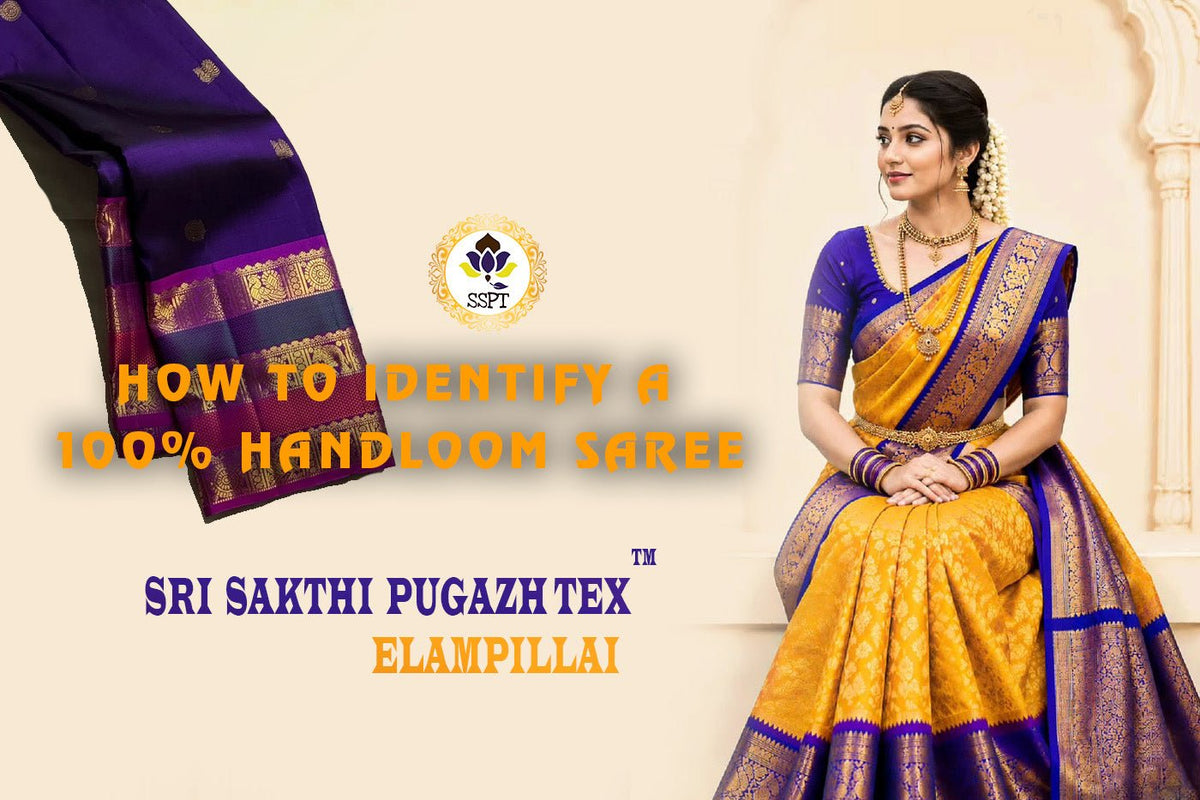
How to Identify a 100% Handloom Saree: The Complete Buying Guide
Have you ever bought a saree labeled "handloom saree," only to feel like something was off the moment it arrived? You're not alone. With so many power loom sarees being sold as handmade, it's becoming harder for Indian women to tell the real thing from a clever copy.
A genuine handloom saree isn't just fabric. It's hours of skilled handwork, generations of weaving tradition, and a story woven into every thread. But how do you know if the saree you're buying is truly 100% handloom, and not a machine-made imitation dressed up with a fancy price tag?
In this guide, we'll walk you through everything you need to know to confidently identify an authentic handloom saree — the fabric checks, the visual cues, the smell test (yes, really), and the common mistakes to avoid. By the end, you'll shop smarter and never get fooled again.

What Makes a Saree "Handloom"?
A handloom saree is woven entirely by hand on a traditional wooden loom, without the help of electricity or machines. Every thread is placed, adjusted, and tightened by a skilled weaver, often using techniques passed down through families for generations.
This is different from a power loom saree, which is mass-produced using electric machines in a fraction of the time. Power loom sarees can look similar at first glance, but they lack the character, texture, and durability of true handwoven pieces.
When you choose a 100% Handloom Saree, you're not just buying clothing. You're supporting India's weaving communities and preserving a craft that's centuries old.
Why It's Getting Harder to Spot a Genuine Handloom Saree
Here's the uncomfortable truth: the market is flooded with fakes. Some sellers use power loom sarees but market them as "handloom" because the word sells. Others mix small handwoven elements with mostly machine-made fabric.
This is exactly why learning to identify real handloom sarees matters. It protects your money, and it protects the weavers who deserve credit and fair pay for their craft.
8 Simple Ways to Identify a 100% Handloom Saree
1. Check for the GI Tag or Handloom Mark
Genuine handloom sarees often come with a Handloom Mark or a Geographical Indication (GI) tag, issued by the Indian government to certify authenticity. If a saree carries this tag, it's a strong sign of genuineness.
Not every authentic handloom saree will have this tag though, especially if bought from smaller local weavers. So use this as one clue among many, not the only one.
2. Look at the Reverse Side of the Saree
This is one of the easiest tricks. Turn the saree over and look at the back.
- Handloom sarees usually show slight irregularities in the weave pattern on the reverse side.
- Power loom sarees tend to look identical on both sides, almost too perfect and uniform.
Real handwork always has tiny, charming imperfections. Perfection is often a red flag.
3. Feel the Texture
Run your fingers gently across the fabric.
- Handloom fabric has a slightly textured, warm, and soft feel because of the manual weaving process.
- Power loom fabric feels flatter, smoother, and more uniform, almost plasticky in cheaper versions.
If it feels "too smooth to be true," it probably is.
4. Check the Weight and Drape
Authentic handloom sarees, especially those made from pure cotton or silk, have a natural weight and fall beautifully when draped. They move with the body instead of stiffly hanging.
Power loom sarees, particularly synthetic blends, often feel lightweight, stiff, or slippery.
5. Examine the Border and Pallu Closely
Handwoven borders and pallus usually have small variations in thread tension and pattern spacing. Look closely with a magnifying glass if needed.
- Uneven, slightly imperfect motifs = likely handloom.
- Perfectly repeated, machine-precise motifs = likely power loom.
6. Do the Burn Test (For Natural Fiber Sarees)
This works well for pure cotton or silk sarees:
- Take a tiny thread from an inside seam.
- Burn it carefully.
- Cotton smells like burning paper and turns to ash.
- Silk smells like burning hair and forms a crushable ball.
- Synthetic fibers melt, smell like plastic, and form a hard bead.
If it melts like plastic, it's not a pure handloom fabric.
7. Ask About the Weaving Time
Authentic handloom sarees take anywhere from a few days to several weeks to weave, depending on the design complexity. If a seller claims to have "hundreds of handloom sarees in stock at the same low price," be cautious. Genuine handwoven pieces take time, and that time reflects in both price and availability.
8. Buy From Trusted, Transparent Sellers
The simplest way to guarantee authenticity? Buy from a brand that's transparent about its weaving process, sourcing, and weaver partnerships. Reputable sellers are proud to share where and how their sarees are made.

Handloom vs Power Loom: Quick Comparison
| Feature | Handloom Saree | Power Loom Saree |
|---|---|---|
| Made by | Hand, on wooden looms | Electric machines |
| Weave pattern | Slight irregularities | Perfectly uniform |
| Texture | Soft, textured, warm | Smooth, flat |
| Production time | Days to weeks | Hours |
| Price | Higher (reflects skill & time) | Lower (mass produced) |
| Durability | Long-lasting, ages well | Wears out faster |
| Uniqueness | Every piece slightly different | Identical copies |
Benefits of Choosing a 100% Handloom Saree
- Unmatched quality: Every saree is crafted with care, resulting in superior finish and durability.
- Unique designs: No two handloom sarees are exactly the same.
- Breathable comfort: Natural fibers like cotton and silk keep you comfortable in India's climate.
- Supports artisans: Your purchase directly helps weaver families and rural livelihoods.
- Timeless value: A well-made handloom saree can be treasured and passed down for generations.
Common Mistakes to Avoid When Buying a Handloom Saree
- Trusting the word "handloom" without verification. Always check for the signs mentioned above.
- Choosing price over quality. If a "handloom" saree is priced suspiciously low, question it.
- Skipping the fabric test. A quick touch and reverse-side check can save you from a bad purchase.
- Buying from unknown sellers with no transparency. Always check seller reviews and product descriptions.
- Ignoring proper care instructions. Even genuine handloom sarees can be damaged with the wrong washing method.
Expert Tips for First-Time Handloom Saree Buyers
- Start with cotton handloom sarees if you're new to this. They're easier to maintain and more affordable than silk.
- Always ask the seller about the weaving region and technique. A knowledgeable seller usually indicates an authentic product.
- Request close-up photos of the fabric and reverse side before buying online.
- Read customer reviews for genuine feedback on texture and quality.

How to Care for Your Handloom Saree
Caring for your handloom saree properly ensures it lasts for years.
- Washing: Hand wash gently in cold water with a mild detergent, especially for the first few washes.
- Drying: Dry in shade, not direct sunlight, to prevent color fading.
- Ironing: Iron on medium heat, ideally with a thin cloth between the iron and fabric.
- Storage: Fold along different lines each time and store in a breathable cotton cloth, not plastic, to prevent yellowing.
- Silk sarees: Store with neem leaves or silica gel packets to protect against moisture and pests.
Styling Ideas for Your Handloom Saree
- Everyday wear: Pair a cotton handloom saree with a simple blouse and minimal jewelry for an effortless, elegant look.
- Festive occasions: Choose a silk handloom saree with a contrast blouse and statement jewelry.
- Office wear: Opt for lighter handloom cottons in solid colors or subtle prints for a professional yet graceful look.
- Modern twist: Try pairing your handloom saree with a stylish crop-top blouse or a belt for a contemporary silhouette.
Why Choose Sri Sakthi Pugazh Tex?
At Sri Sakthi Pugazh Tex, we work directly with skilled handloom weavers to bring you sarees that are 100% authentic, beautifully crafted, and made to last. Every saree in our collection is checked for quality, weave integrity, and finish before it reaches you.
We believe every woman deserves a saree that feels as good as it looks, and one that carries the true spirit of Indian craftsmanship.

Frequently Asked Questions (FAQs)
1. How can I tell if a saree is really handloom and not power loom? Check the reverse side of the saree for slight irregularities, feel the texture for warmth and softness, and look for uneven motifs in the border. Perfectly uniform patterns usually indicate power loom production.
2. Are handloom sarees more expensive than power loom sarees? Yes, generally. Handloom sarees take significantly longer to weave and require skilled labor, which reflects in the price. This higher cost supports fair wages for weavers.
3. Is cotton or silk better for a first handloom saree purchase? Cotton handloom sarees are a great starting point. They're comfortable, easier to maintain, and more budget-friendly than silk options.
4. Does a GI tag guarantee a saree is handloom? A GI tag is a strong indicator of authenticity, but not all genuine handloom sarees carry one, especially those from smaller local weavers. Use it alongside other checks.
5. How do I wash a handloom saree without damaging it? Hand wash in cold water with a mild detergent, dry in shade, and iron on medium heat. Avoid harsh detergents and direct sunlight, which can fade colors and weaken fibers.
6. Can handloom sarees be worn daily? Yes, especially cotton handloom sarees, which are breathable and comfortable for everyday wear in India's climate.
7. Why are handloom sarees considered better quality? Because they're handwoven with care and attention, handloom sarees typically have better durability, unique designs, and a richer texture compared to mass-produced power loom sarees.
8. Where can I buy authentic 100% handloom sarees online? You can shop genuine, verified handloom sarees at Sri Sakthi Pugazh Tex, where every piece is sourced directly from skilled weavers.
Final Thoughts
Identifying a genuine 100% Handloom Saree doesn't have to be complicated. With a few simple checks, like examining the reverse side, feeling the texture, and asking the right questions, you can shop with confidence and avoid falling for imitation pieces.
A real handloom saree is more than an outfit. It's a piece of art, tradition, and skilled craftsmanship, worn with pride.
Ready to experience the difference? Explore our handpicked collection of authentic handloom sarees at Sri Sakthi Pugazh Tex, and bring home a piece of India's rich weaving heritage today.

Written by Sri Sakthi Pugazh Tex Elampillai



Leave a comment
This site is protected by hCaptcha and the hCaptcha Privacy Policy and Terms of Service apply.