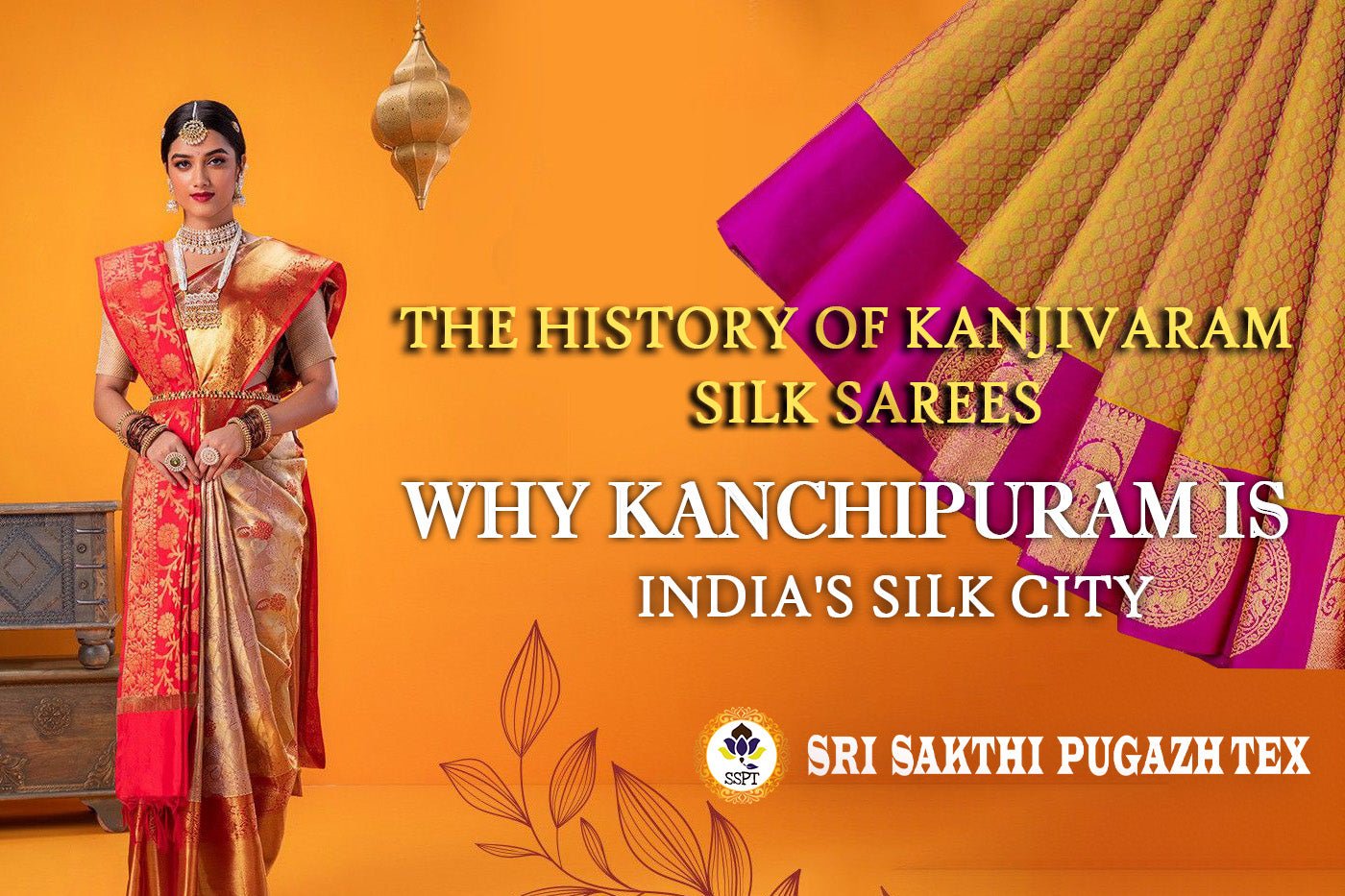
The History of Kanjivaram Silk Sarees: Why Kanchipuram Is India's Silk City
Every Kanjivaram silk sarees tells a story that is centuries old. Behind every gold zari border and every shimmering silk fold lies a tradition passed down through generations of skilled weavers in Tamil Nadu.
If you have ever wondered why Kanjivaram Silk Sarees are considered the crown jewels of Indian fashion, or why Kanchipuram is called the silk city of India, you are in the right place.
In this blog, we will explore the fascinating history of Kanjivaram sarees, the reasons behind Kanchipuram's silk-weaving fame, and everything you need to know before buying your own piece of this timeless heritage from Sri Sakthi Pugazh Tex.

What Are Kanjivaram Silk Sarees?
Kanjivaram silk sarees, also called Kanchipuram silk sarees, are handwoven silk sarees made in and around the town of Kanchipuram in Tamil Nadu. They are known for their:
- Rich, heavy silk fabric
- Bright, contrasting colors
- Wide gold zari borders
- Intricate temple, peacock, and floral motifs
- Exceptional durability that lasts generations
These sarees are not just clothing. They are heirlooms, often passed down from mothers to daughters and worn at weddings, festivals, and important family occasions.
The Origin Story: How Kanjivaram Sarees Began
Ancient Roots in Mythology
According to popular belief, the weavers of Kanchipuram trace their skills back to sage Markanda, who is believed to be the master weaver of the gods and the weaver of cloth from lotus fibers. This divine connection gave the craft a sacred status that has continued for centuries.
Historical Development
The weaving tradition in Kanchipuram is believed to be over 400 years old, though silk weaving in the region has roots that stretch back even further. Two major weaving communities, the Devangas and the Saligars, settled in Kanchipuram and brought their expertise in silk weaving with them.
Over time, the town grew into a hub where weavers experimented with silk threads, natural dyes, and gold zari to create sarees fit for royalty and temple deities. Kings and queens of South India patronized these weavers, which helped the craft flourish and gain royal recognition.
The Temple Connection
Kanchipuram is often called the "City of a Thousand Temples." This is not a coincidence. Many temple deities in the region are draped in silk sarees during rituals and festivals, and weavers were traditionally commissioned to create these sacred garments. This deep connection between temples and textiles shaped the motifs still used today, including temple borders, gopuram (temple tower) designs, and depictions of deities.

Why Is Kanchipuram Famous for Silk Sarees?
Many people ask why Kanchipuram, and not another city, became India's silk capital. Here are the key reasons.
1. Ideal Geographic Location
Kanchipuram sits close to the Coromandel Coast, which historically made it easier to trade silk and dyes with other regions. The town also had access to good quality water, which is essential for dyeing and washing silk threads.
2. Generations of Skilled Artisans
Weaving in Kanchipuram is a family tradition. Skills are passed from father to son and mother to daughter, ensuring that techniques developed hundreds of years ago are preserved today. This unbroken chain of expertise is a major reason why the quality remains unmatched.
3. Unique Weaving Technique
Kanjivaram sarees use a distinctive three-shuttle weaving technique. The body and the border of the saree are woven separately and then interlocked together so seamlessly that the joint becomes nearly invisible, yet incredibly strong. This is one reason why Kanjivaram sarees can last for decades without tearing at the border.
4. Pure Mulberry Silk
Kanchipuram weavers traditionally use pure mulberry silk sourced mainly from South India and Karnataka. This silk is thicker and more durable than silk used in many other regions, giving Kanjivaram sarees their signature weight and richness.
5. Real Gold and Silver Zari
Authentic Kanjivaram sarees use zari threads made with a silver core dipped in gold. This is why the borders shine so brilliantly and why genuine Kanjivaram sarees are considered valuable investments, not just clothing.
6. Government Recognition (GI Tag)
Kanchipuram silk sarees received the Geographical Indication (GI) tag in 2005–2006, officially recognizing them as a product unique to the Kanchipuram region. This protects the authenticity of the craft and ensures that only sarees woven in this region can be called true Kanjivaram silk.
Features That Make Kanjivaram Sarees Special
- Contrast borders: Wide, richly colored borders that stand out from the main body of the saree
- Temple motifs: Designs inspired by South Indian temple architecture
- Heavyweight silk: A thicker fabric compared to other silk varieties
- Long-lasting color: Traditional dyeing methods that keep colors vibrant for years
- Handwoven craftsmanship: Each saree can take anywhere from a few days to several weeks to complete, depending on the design complexity
Benefits of Choosing a Kanjivaram Silk Saree
- Timeless elegance – Suitable for weddings, festivals, and formal events
- Durability – With proper care, a Kanjivaram saree can last for generations
- Investment value – Pure silk and real zari sarees often increase in sentimental and material value over time
- Cultural connection – Wearing a Kanjivaram saree connects you to centuries of Indian tradition
- Versatility – Available in styles ranging from bold bridal reds to soft pastel everyday silks
Buying Guide: How to Choose the Right Kanjivaram Silk Saree
Buying a Kanjivaram saree is an investment, so it helps to know what to look for.
Check the Silk Quality
Genuine Kanjivaram sarees use pure mulberry silk. Rub the fabric gently; pure silk feels smooth and slightly warm, while synthetic blends often feel cooler and slippery.
Look at the Zari Work
Real zari has a slightly dull, antique golden shine rather than a bright, plastic-like shine. Over time, real zari also tarnishes gracefully instead of turning dull grey immediately.
Examine the Border Joint
Turn the saree over and check where the border meets the body. In authentic Kanjivaram weaving, this join should be neat and almost seamless.
Consider the Occasion
- Bridal wear: Choose rich reds, maroons, or deep greens with heavy zari work
- Festive wear: Bright colors like mustard, orange, or royal blue work beautifully
- Everyday elegance: Lighter silk sarees with smaller borders are easier for regular wear
Set a Realistic Budget
Prices vary based on silk purity, zari content, and design complexity. It is better to buy one authentic Kanjivaram saree than several lower-quality imitations.
Explore our curated collection of authentic Kanjivaram silk sarees to find a piece that matches your occasion and style.
Styling Ideas for Kanjivaram Silk Sarees
- Pair a deep red Kanjivaram saree with traditional gold jewelry for weddings
- Choose a pastel-toned Kanjivaram saree with minimal jewelry for daytime functions
- Opt for a contrast blouse in a complementary color to make the border pop
- Use a statement neckpiece with a simple bun hairstyle for a classic South Indian look
- Add a small bindi and jasmine flowers in your hair for an authentic festive touch
Avoid When Buying or Wearing Kanjivaram Sarees
- Buying based on price alone: Extremely low prices often indicate synthetic silk or fake zari
- Ignoring the pallu design: The pallu is often the most detailed part of the saree, so inspect it closely
- Improper draping: A Kanjivaram saree, being heavier, needs proper pleating for a graceful look
- Skipping care instructions: Washing at home instead of dry cleaning can damage the silk and zari
- Storing incorrectly: Folding along the same lines repeatedly can weaken the fabric over time
Care Tips to Preserve Your Kanjivaram Silk Saree
- Always dry clean your Kanjivaram saree; avoid washing it at home
- Store it wrapped in a soft cotton or muslin cloth, not plastic
- Refold along different lines every few months to prevent permanent creases
- Keep it away from direct sunlight and moisture
- Air it out occasionally in shade to prevent fungal growth
- Store with neem leaves or silica gel packets to keep pests away
Kanjivaram vs. Other Silk Sarees
| Feature | Kanjivaram Silk | Other Silk Sarees |
|---|---|---|
| Weaving Technique | Interlocked three-shuttle weave | Often single continuous weave |
| Silk Type | Pure mulberry silk | Varies, sometimes mixed with synthetic |
| Zari | Real silver-gold zari | Often imitation zari |
| Durability | Decades with proper care | Shorter lifespan on average |
| Motifs | Temple, peacock, floral | Varies by region |

Frequently Asked Questions (FAQs)
1. What makes Kanjivaram silk sarees different from other silk sarees? Kanjivaram sarees use a unique interlocking weave technique, pure mulberry silk, and real gold-silver zari, making them heavier, more durable, and more valuable than many other silk sarees.
2. Why is Kanchipuram called the silk city of India? Kanchipuram earned this title due to its centuries-old weaving tradition, skilled artisan families, temple-inspired designs, and the official GI tag recognizing it as the authentic home of Kanjivaram silk.
3. How can I identify a genuine Kanjivaram silk saree? Check the texture of the silk, examine the border joint for a seamless finish, and look for a slightly antique shine in the zari rather than a bright, artificial shine.
4. Are Kanjivaram silk sarees suitable for daily wear? While heavier bridal Kanjivaram sarees are best for special occasions, lighter versions with smaller borders and softer silk are suitable for regular festive or formal wear.
5. How should I store my Kanjivaram silk saree at home? Wrap it in a soft cotton cloth, avoid plastic covers, keep it away from direct sunlight, and refold it periodically to prevent permanent creases.
6. Can Kanjivaram silk sarees be washed at home? No, it is best to dry clean Kanjivaram sarees to protect the silk fabric and preserve the zari work.
7. Why are Kanjivaram silk sarees expensive? The price reflects the cost of pure mulberry silk, real gold-silver zari, and the many hours of skilled handweaving involved in creating each piece.
8. What occasions are best suited for Kanjivaram silk sarees? Weddings, festivals, religious ceremonies, and formal family functions are ideal occasions for wearing a Kanjivaram silk saree.
9. Do Kanjivaram sarees come in modern designs too? Yes, along with traditional temple and peacock motifs, many weavers now create Kanjivaram sarees with contemporary color combinations and minimalist borders for modern tastes.
10. Where can I buy authentic Kanjivaram silk sarees online? You can explore a wide range of authentic, handwoven Kanjivaram silk sarees at Sri Sakthi Pugazh Tex, where each piece is sourced with a focus on quality and tradition.
Bring Home a Piece of Timeless Tradition
A Kanjivaram silk saree is more than an outfit. It is a piece of South Indian heritage, woven with skill, patience, and centuries of tradition. When you choose an authentic Kanjivaram saree, you are choosing craftsmanship that has been perfected over generations.
At Sri Sakthi Pugazh Tex, we bring you a carefully curated collection of authentic Kanjivaram silk sarees for every occasion, from grand weddings to festive celebrations. Explore our collection today and find a saree that will become tomorrow's family heirloom.
Shop Kanjivaram Silk Sarees Now →

Written by Sri Sakthi Pugazh Tex Elampillai

Leave a comment
This site is protected by hCaptcha and the hCaptcha Privacy Policy and Terms of Service apply.