
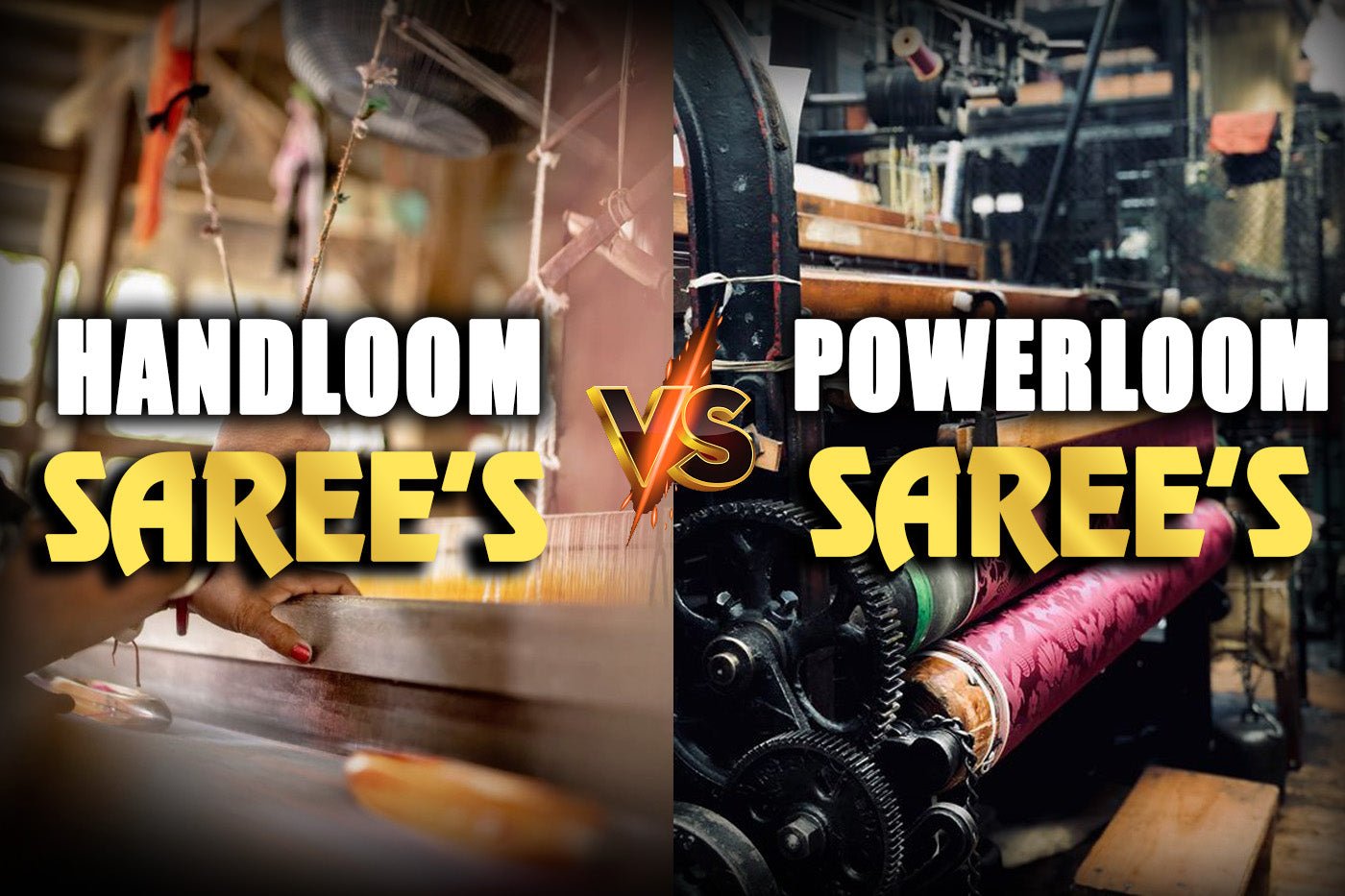
Handloom vs Powerloom Sarees: Which Is Better?
Introduction
Shopping for the perfect saree can feel overwhelming, especially when you come across terms like "handlooma Sarees" and "powerloom Sarees" while browsing online. Are they really that different? Does it matter which one you buy?
The truth is, yes, it matters a lot. Handloom sarees and powerloom sarees are made using completely different processes, and this affects everything from the price you pay to how the saree feels on your skin, how long it lasts, and even how it drapes.
At Sri Sakthi Pugazh Tex, we've spent years helping women find sarees that suit their style, budget, and occasion. In this guide, we'll break down the real differences between handloom and powerloom sarees in simple terms, so you can shop with confidence and pick the saree that's truly right for you.
By the end of this article, you'll know:
- What sets handloom and powerloom sarees apart
- The pros and cons of each
- How to identify a genuine handloom saree
- Tips for buying, styling, and caring for your saree
Let's get started.
What Is a Handloom Saree?

A handloom saree is woven entirely by hand using traditional wooden looms. Skilled weavers, often working from their homes or small village workshops, spend anywhere from a few days to several weeks creating a single saree, thread by thread.
This process has been passed down through generations in India and forms an important part of our cultural heritage. Each handloom saree carries a bit of the weaver's personal touch, which is why no two pieces are ever exactly the same.
Key Features of Handloom Sarees
- Woven by hand on traditional looms
- Takes days or weeks to complete one saree
- Slight natural variations in weave and texture
- Breathable, soft, and comfortable fabric
- Often supports rural artisans and their families
- Usually more expensive due to the labor involved
What Is a Powerloom Saree?

A powerloom saree, on the other hand, is made using electric or motorized looms. These machines can produce sarees much faster than a human weaver, often finishing a saree in just a few hours.
Powerloom sarees are manufactured in bulk, which makes them more affordable and widely available. They're a popular choice for everyday wear because of their consistent quality and lower price point.
Key Features of Powerloom Sarees
- Woven using machines and motorized looms
- Produced quickly in large quantities
- Uniform texture and pattern throughout
- Generally more budget-friendly
- Easily available in a wide range of designs and colors
- Slightly less breathable than handloom fabric
Handloom vs Powerloom Sarees: A Detailed Comparison
| Factor | Handloom Sarees | Powerloom Sarees |
|---|---|---|
| Production Method | Hand-woven on traditional looms | Machine-woven |
| Time to Produce | Days to weeks | A few hours |
| Price Range | Higher | Budget-friendly |
| Texture | Slightly uneven, natural feel | Smooth, uniform finish |
| Comfort | Breathable, soft against skin | Comfortable but less breathable |
| Durability | Long-lasting with proper care | Durable but shorter lifespan |
| Uniqueness | Each piece is one-of-a-kind | Identical patterns across pieces |
| Cultural Value | Supports traditional artisans | Mass-produced |
| Best For | Special occasions, gifting, heirlooms | Daily wear, office wear, casual outings |
Benefits of Handloom Sarees

1. Unmatched Craftsmanship
Every handloom saree tells a story. The tiny imperfections in the weave aren't flaws, they're proof of human skill and effort.
2. Superior Comfort
Handloom fabric tends to be more breathable, making it ideal for India's warm climate. This is especially true for handloom cotton sarees.
3. Supports Artisans
When you buy a handloom saree, you directly support weaver communities and help preserve a centuries-old tradition.
4. Long-Term Value
While the initial cost is higher, a well-maintained handloom saree can last for generations, often becoming a treasured family heirloom.
Benefits of Powerloom Sarees

1. Affordability
Powerloom sarees offer a stylish look without stretching your budget, making them great for building a versatile wardrobe.
2. Wide Variety
Since production is faster, powerloom sarees come in a huge range of prints, colors, and designs to match every trend.
3. Easy Availability
You'll find powerloom sarees readily in stock, so there's no long wait time between placing an order and receiving your saree.
4. Low Maintenance
Powerloom fabric is generally easier to wash and maintain, making it convenient for everyday use.
How to Identify a Genuine Handloom Saree
Many shoppers worry about being sold a powerloom saree labeled as "handloom." Here's how to spot the real thing:
- Check for minor irregularities: Genuine handloom sarees have slight variations in weave that machines can't replicate.
- Look at the border and pallu: Handloom borders often have a slightly thicker, more textured feel.
- Feel the fabric: Handloom sarees usually feel softer and more organic compared to the stiffer, uniform texture of powerloom fabric.
- Check for the Handloom Mark: Genuine handloom products in India often carry the official Handloom Mark certification.
- Ask the seller: A trustworthy store, like Sri Sakthi Pugazh Tex, will always be transparent about whether a saree is handloom or powerloom.
Buying Guide: Which Saree Should You Choose?
Choosing between handloom and powerloom depends on your priorities. Ask yourself:
Choose Handloom If:
- You're buying for a wedding, festival, or special occasion
- You value craftsmanship and uniqueness
- You want a piece that supports Indian artisans
- You're okay with a higher price point for lasting quality
Choose Powerloom If:
- You need a saree for daily or office wear
- You're working with a tighter budget
- You want more design options to choose from
- You prefer low-maintenance fabric
Expert Tips When Buying Sarees Online
- Always read the product description carefully to check if it mentions handloom or powerloom.
- Look at customer reviews and photos for an honest idea of texture and color.
- Check the fabric type (cotton, silk, linen) alongside the loom type, as this affects comfort and price.
- Buy from a trusted online saree shop with clear return and shipping policies.
- Don't just go by price. A very cheap "handloom" saree is often mislabeled.
Common Mistakes to Avoid
- Assuming all expensive sarees are handloom. Price alone isn't proof of authenticity.
- Ignoring fabric care instructions, which can damage delicate handloom weaves.
- Buying based on photos alone without checking material details or reviews.
- Not asking questions before purchase, especially when shopping for occasion wear.
- Overlooking the return policy, which matters if the saree doesn't match your expectations.
Styling Ideas for Handloom and Powerloom Sarees
- For weddings and festivals: Pair a rich handloom silk saree with statement jewelry and a matching blouse for a regal look.
- For office wear: A simple powerloom cotton saree in solid colors looks polished and professional.
- For casual outings: Opt for lightweight powerloom sarees with playful prints, paired with minimal accessories.
- For gifting: Handloom sarees make thoughtful, meaningful gifts for mothers, mothers-in-law, or close friends.
Saree Care Tips
Whether you choose handloom or powerloom, proper care extends the life of your saree:
- Dry clean delicate handloom silk sarees to preserve the weave and color.
- Hand wash cotton sarees in cold water with mild detergent.
- Store sarees in a cotton cloth bag, away from direct sunlight and humidity.
- Iron on a low to medium setting, especially for silk and zari-work sarees.
- Avoid hanging heavy silk sarees for long periods, as this can stretch the fabric.
Frequently Asked Questions
1. Is a handloom saree better than a powerloom saree? It depends on your needs. Handloom sarees offer superior craftsmanship and comfort, while powerloom sarees offer affordability and variety. Neither is "better" overall, it's about what suits your occasion and budget.
2. Why are handloom sarees more expensive? Handloom sarees take significantly more time and skilled labor to produce, since they're woven entirely by hand. This craftsmanship directly increases the cost.
3. Can I wear a powerloom saree for a wedding? Yes, many powerloom sarees, especially those with rich prints or zari work, look elegant enough for weddings and festive occasions.
4. How do I know if a saree is genuinely handloom? Look for slight irregularities in the weave, a softer fabric feel, and check for a Handloom Mark certification if available.
5. Which is more comfortable for daily wear? Powerloom sarees, particularly in cotton, are often more practical and low-maintenance for daily wear.
6. Do handloom sarees last longer than powerloom sarees? Yes, with proper care, handloom sarees tend to be more durable and can last for many years, sometimes even decades.
7. Are handloom sarees only made of silk? No, handloom sarees are made in various fabrics, including cotton, silk, and linen, depending on the region and weaving tradition.
8. Where can I buy authentic handloom and powerloom sarees online? You can explore a curated collection of both handloom and powerloom sarees at Sri Sakthi Pugazh Tex, where every product is clearly labeled for transparency.
Conclusion
Both handloom and powerloom sarees have their own unique charm. Handloom sarees offer unmatched craftsmanship, comfort, and cultural value, making them perfect for special occasions and gifting. Powerloom sarees, meanwhile, offer affordability, variety, and convenience for everyday wear.
The best choice ultimately depends on your budget, occasion, and personal preference. Whichever you choose, make sure you're buying from a trusted online saree shop that's transparent about what you're getting.
At Sri Sakthi Pugazh Tex, we're proud to offer a thoughtfully curated range of both handloom and powerloom sarees, so every woman can find a piece that truly fits her style and story. Browse our collection today and find the saree that speaks to you.

Written by Sri Sakthi Pugazh Tex Elampillai


Leave a comment
This site is protected by hCaptcha and the hCaptcha Privacy Policy and Terms of Service apply.