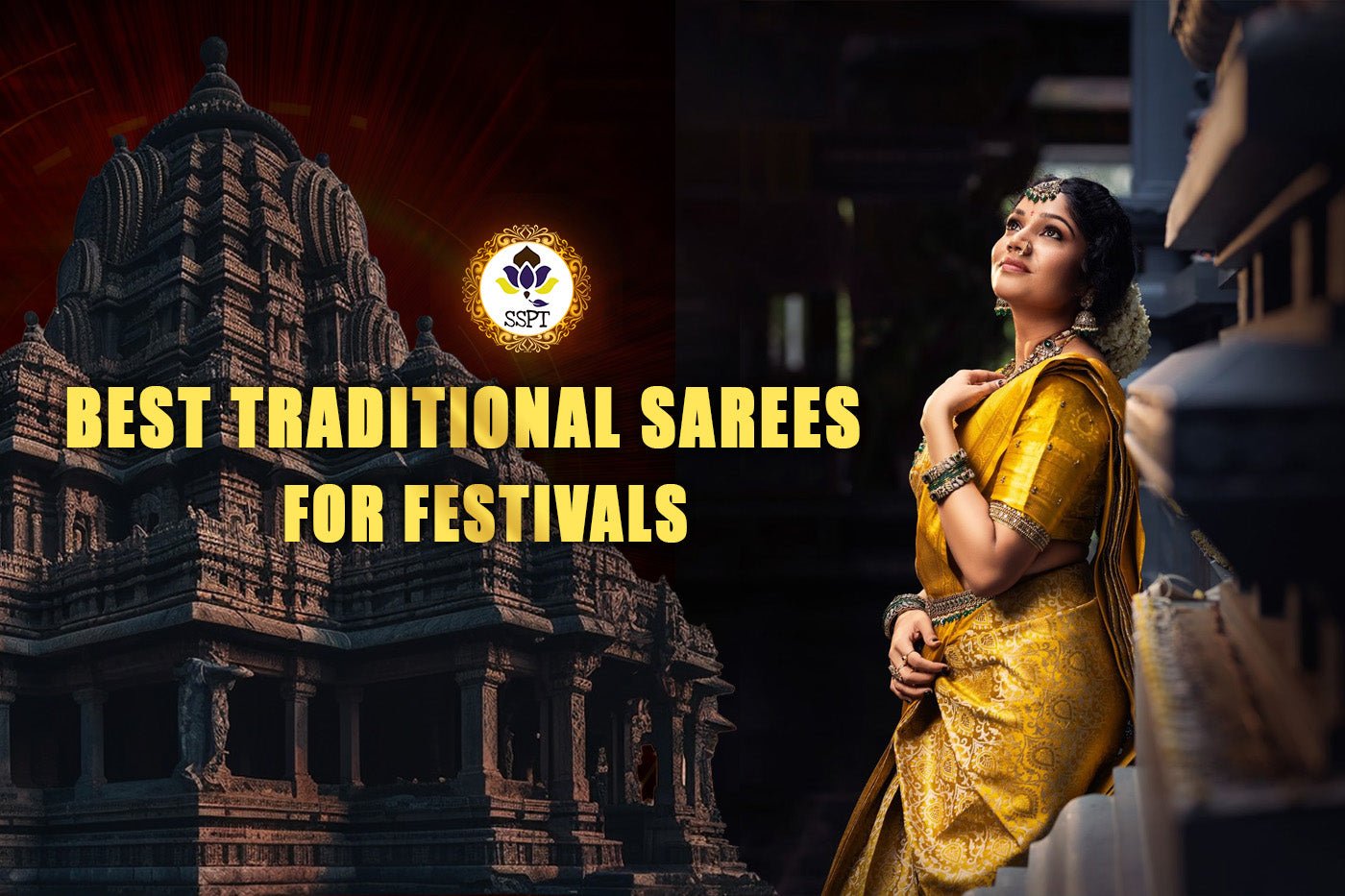
Best Traditional Sarees for Festivals
Festivals bring color, joy, and a reason to dress our best. And nothing captures the spirit of an Indian celebration quite like a beautiful saree. If you are searching for the best traditional sarees for festivals, you are in the right place.
At Sri Sakthi Pugazh Tex, we understand that every festival deserves a saree that feels special. In this guide, we will walk you through everything you need to know about choosing traditional sarees for women — from fabric types and styling tips to buying mistakes you should avoid. By the end, you will know exactly which saree suits your next festival celebration.
Let's get started.

Why Traditional Sarees Are Perfect for Festivals
A saree is more than just clothing. It is a symbol of grace, culture, and tradition passed down through generations of Indian women. During festivals like Diwali, Pongal, Navratri, and weddings, a well-chosen saree instantly elevates your look and connects you to your roots.
Here is why traditional sarees remain the top choice for festive occasions:
- Timeless elegance – Sarees never go out of style, unlike trendy outfits that fade with seasons.
- Versatility – One saree can be styled in multiple ways for different events.
- Cultural significance – Wearing a traditional saree honors customs and family traditions.
- Comfort – Good quality fabric sarees are breathable and comfortable for long festival hours.
- Photo-ready look – Sarees drape beautifully, making every festival photo memorable.
Types of Traditional Sarees for Every Festival
Choosing the right saree starts with understanding the fabric and style. Here are some popular options loved by women across India.
1. Silk Sarees
Silk sarees are the first choice for major festivals and weddings. Known for their rich texture and natural sheen, silk sarees like Kanchipuram, Banarasi, and Mysore silk bring a regal touch to any outfit.

2. Cotton Sarees
For daytime festivals or warmer regions, handloom cotton sarees offer comfort without compromising on style. They are lightweight, breathable, and perfect for casual festive gatherings.

3. Printed and Designer Sarees
Modern women often prefer printed or lightly embellished sarees for smaller celebrations. These sarees combine tradition with contemporary fashion trends.

4. Half-Silk and Blended Sarees
If you want the richness of silk without the higher price tag, half-silk or blended sarees are a smart, budget-friendly alternative.

Benefits of Choosing Quality Traditional Sarees
Investing in a well-made saree pays off in more ways than one:
- Longer durability – Quality fabric withstands repeated wear and washing.
- Better drape – Premium sarees fall gracefully and hold their shape.
- Skin-friendly – Authentic, well-woven fabrics reduce irritation and discomfort.
- Higher resale and heirloom value – Fine sarees can be passed down as family treasures.
- Confidence boost – A well-fitted, quality saree naturally enhances your festive glow.
Features to Look for When Buying a Festival Saree
Before you buy a saree, keep these key features in mind:
- Fabric quality – Check for authentic silk, cotton, or blended material.
- Weave and border design – Traditional zari borders add richness to the look.
- Color palette – Choose festival-appropriate colors like red, maroon, gold, green, or royal blue.
- Blouse piece included – Confirm if a matching blouse piece comes with the saree.
- Length and width – Standard sarees are 5.5 to 6.5 meters; choose based on your height and draping style.
Buying Guide: How to Choose the Right Saree for Your Festival
Selecting the perfect saree depends on the occasion, your body type, and personal style. Here is a simple guide:
Match the Saree to the Occasion
- Diwali or weddings – Opt for heavy silk sarees with zari work.
- Pongal or Navratri – Choose vibrant, traditional cotton or silk-cotton sarees.
- Small family gatherings – Light printed or georgette sarees work well.
Consider Your Body Type
- Petite women can choose sarees with smaller prints and vertical borders to appear taller.
- Curvier women look elegant in sarees with diagonal or flowing patterns.
- Taller women can experiment with bold prints and heavy borders confidently.
Pick Colors That Suit Your Skin Tone
- Warm skin tones shine in gold, orange, and maroon shades.
- Cool skin tones look stunning in blue, purple, and silver tones.
Styling Ideas for Traditional Sarees
A saree's beauty also depends on how you style it. Try these ideas for your next festival:
- Statement jewelry – Pair silk sarees with temple jewelry for a classic festive look.
- Hairstyles – A neat bun with flowers complements traditional sarees beautifully.
- Footwear – Choose comfortable juttis or heels depending on the event duration.
- Draping style – Experiment with Nivi, Bengali, or Coorg draping styles for a fresh look.
- Layered accessories – Add bangles, a maang tikka, or a statement necklace to complete the outfit.
Common Mistakes to Avoid When Buying Sarees
Many women unknowingly make these mistakes while shopping for festival sarees:
- Ignoring fabric quality – Always check the material before purchase, not just the design.
- Choosing the wrong blouse size – A poorly fitted blouse can ruin the entire look.
- Overlooking care instructions – Some fabrics need dry cleaning; skipping this can damage the saree.
- Buying without trying the drape – Some sarees look different once draped compared to how they appear folded.
- Focusing only on trends – Trendy sarees may not always suit your personal style or occasion.
Care Tips to Keep Your Sarees Looking New
Proper care extends the life of your festive sarees:
- Dry clean silk sarees to preserve color and texture.
- Store sarees in a cotton cloth or saree bag, not plastic, to prevent moisture damage.
- Iron on a low to medium setting, especially for delicate fabrics.
- Avoid direct sunlight for extended periods, as it can fade colors.
- Refold sarees occasionally to prevent permanent crease lines.
Silk vs. Cotton Sarees: Which One Should You Choose?
| Feature | Silk Sarees | Cotton Sarees |
|---|---|---|
| Best For | Weddings, major festivals | Daytime events, casual festivals |
| Comfort | Moderate | High |
| Maintenance | Dry clean recommended | Machine or hand wash |
| Price Range | Higher | Budget-friendly |
| Look | Rich and regal | Simple and elegant |
Both have their place in a woman's wardrobe. For grand celebrations, silk wins. For comfort and everyday festive wear, cotton is unbeatable.

Expert Tips from Sri Sakthi Pugazh Tex
After years of curating traditional sarees for women, here are our top recommendations:
- Always keep at least one heavy silk saree in your wardrobe for last-minute festival invites.
- Rotate your saree collection with a mix of silk, cotton, and printed options for versatility.
- Invest in quality over quantity — one well-made saree outlasts three cheaply made ones.
- Try on the blouse before the festival day to avoid last-minute alterations.
Explore Our Collection
Ready to find your perfect festival saree? Browse our curated collection of traditional sarees, designed for every celebration and body type. Whether you're shopping for Diwali, a wedding, or a family function, we have something special waiting for you.
Learn more about us on our About Us page, check our Shipping Policy for delivery timelines, and review our Return Policy for a worry-free shopping experience. Have questions? Reach out through our Contact page — our team is happy to help.
Frequently Asked Questions
1. What is the best fabric for festival sarees? Silk is the most popular choice for major festivals due to its rich texture and traditional appeal. Cotton is preferred for lighter, daytime celebrations.
2. How do I choose a saree color for Diwali? Bright, festive colors like red, maroon, gold, and royal blue work beautifully for Diwali celebrations.
3. Can I wear the same saree for multiple festivals? Yes, versatile sarees in neutral or classic colors can be restyled with different blouses and accessories for various occasions.
4. How much fabric is needed for a saree blouse? Most sarees come with a matching blouse piece of about 0.8 to 1 meter, which is enough for a standard blouse design.
5. How do I take care of silk sarees after wearing them? Dry clean silk sarees after each wear, store them in a breathable cloth bag, and avoid folding along the same lines repeatedly.
6. What is the ideal saree length for tall and short women? Standard sarees measuring 5.5 to 6.5 meters suit most heights, but taller women may prefer the longer end of this range for a fuller drape.
7. Are handloom sarees better than machine-made sarees? Handloom sarees are often considered more authentic and durable due to traditional weaving techniques, though machine-made sarees can be more budget-friendly.
8. How do I choose a saree that suits my body type? Petite women should choose smaller prints and vertical borders, while curvier women look elegant in flowing, diagonal patterns.
9. What accessories go best with traditional sarees? Temple jewelry, statement bangles, and a maang tikka pair beautifully with traditional silk sarees for festivals.
10. Where can I buy authentic traditional sarees online? You can explore a wide range of authentic, high-quality traditional sarees at Sri Sakthi Pugazh Tex, designed specifically for festive occasions.
Conclusion
Choosing the best traditional saree for a festival does not have to be overwhelming. Focus on fabric quality, occasion, color, and comfort, and you will find a saree that makes you feel confident and beautiful all day long.
At Sri Sakthi Pugazh Tex, we are committed to helping Indian women celebrate every festival in style with our curated collection of traditional sarees. Explore our latest arrivals today and find the perfect saree for your next celebration.
Shop now and make this festival unforgettable.

Written by Sri Sakthi Pugazh Tex Elampillai

Leave a comment
This site is protected by hCaptcha and the hCaptcha Privacy Policy and Terms of Service apply.