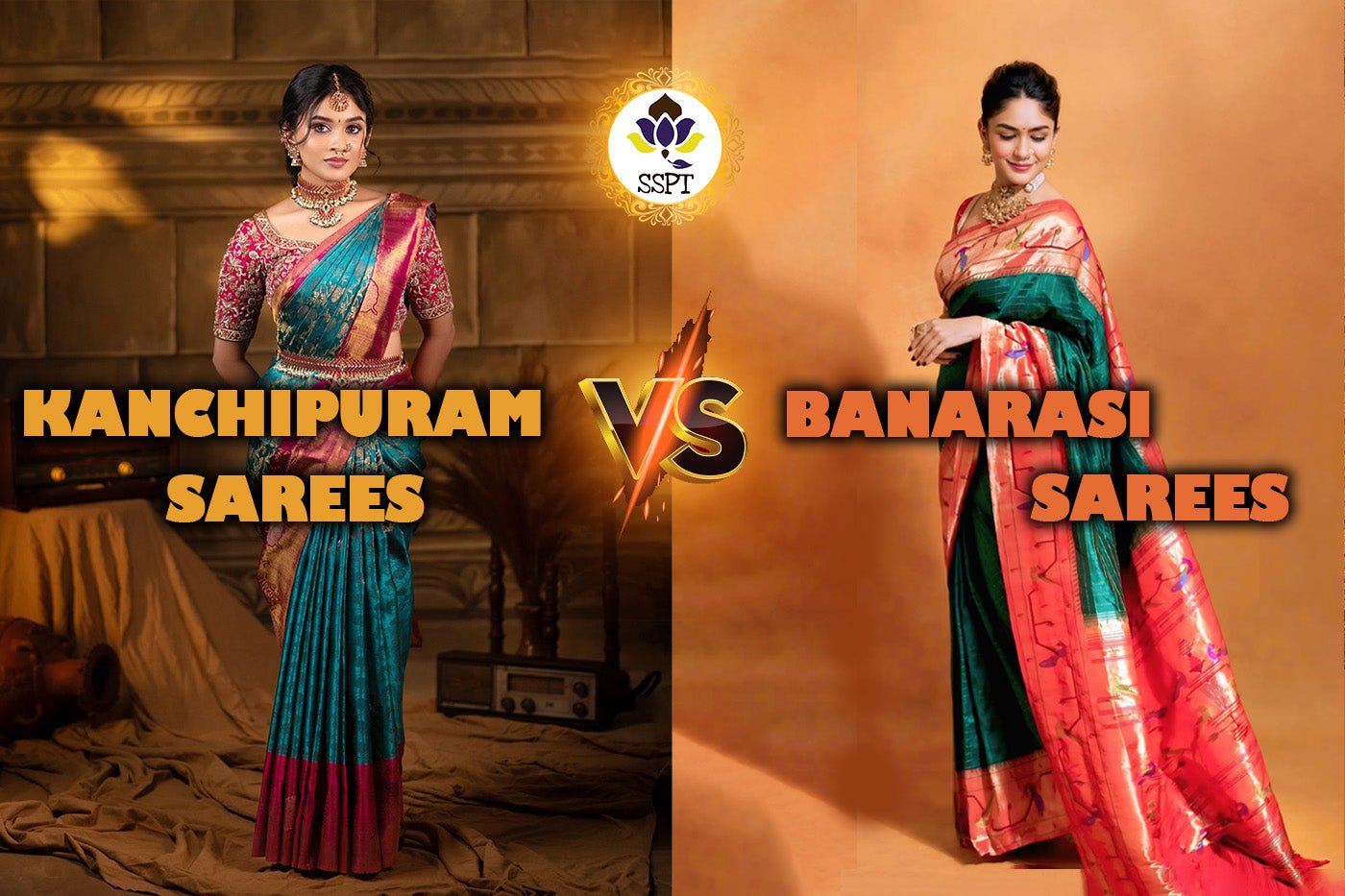
Banarasi vs Kanchipuram Sarees: Which One Is Right for You?
If you have ever stood in front of a saree collection, torn between the golden shimmer of a Banarasi Sarees and the rich texture of a Kanchipuram Sarees, you are not alone. These two are among the most loved sarees in India, and both carry centuries of weaving tradition behind them.
But they are not the same. Their silk, weaving style, weight, price, and even the occasions they suit are quite different.
In this guide, we will break down Banarasi Sarees and Kanchipuram Sarees in simple terms, so you can pick the one that fits your body type, budget, and occasion. Whether you are shopping for your wedding, a festival, or simply want to add a timeless piece to your wardrobe, this comparison will help you shop smarter.
Let's get into it.
A Quick Introduction to Both Sarees
What Makes a Banarasi Saree Special?
Banarasi sarees come from Varanasi (Banaras), Uttar Pradesh. They are known for:
- Fine silk woven with intricate gold and silver zari work
- Mughal-inspired motifs like florals, paisleys, and jhallar (foliage) patterns
- A soft, flowing drape that feels luxurious against the skin
- Weaving techniques like Jangla, Tanchoi, Vaskat, and Cutwork
These sarees were once woven exclusively for royalty, and that heritage still shows in every thread.

What Makes a Kanchipuram Sarees Special?
Kanchipuram sarees, also called Kanjivaram sarees, originate from Kanchipuram in Tamil Nadu. They stand out because of:
- Thick, durable silk with a slightly stiff, structured drape
- Bold contrast borders and pallus, often in a different color from the body
- Temple borders, checks, stripes, and traditional South Indian motifs
- A unique interlocking weaving technique called "korvai" that joins the border and body separately for extra strength
Kanchipuram sarees are deeply tied to South Indian wedding culture and are often passed down as heirlooms.

Banarasi vs Kanchipuram: Key Differences
1. Silk Texture and Weight
Banarasi sarees use fine, lightweight silk that drapes softly and moves gracefully. Kanchipuram sarees use heavier, thicker silk that holds its shape and has a more structured fall.
If you prefer a saree that flows easily and feels light through a long event, Banarasi may suit you better. If you want a saree that stands out with body and richness, Kanchipuram is the better pick.
2. Weaving Technique
Banarasi weavers use brocade techniques where the zari and silk threads are woven together throughout the fabric, creating an all-over pattern. Kanchipuram weavers use the korvai technique, where the border, body, and pallu are woven separately and then interlocked together, making the saree extremely durable.
3. Design and Motifs
Banarasi sarees feature Mughal-inspired florals, vines, and paisleys in delicate detail. Kanchipuram sarees favor bold temple borders, peacocks, mangoes, and checks, reflecting South Indian temple architecture.
4. Zari Work
Both sarees use real or replica gold and silver zari, but the application differs. Banarasi zari is woven in intricate, dense patterns across the fabric. Kanchipuram zari is concentrated more in the borders and pallu, making the contrast bolder.
5. Price Range
Pricing depends on silk purity, zari content, and handwork. Generally:
- Banarasi sarees range from mid-range to premium, depending on the weave complexity
- Kanchipuram sarees tend to sit in the premium to luxury range, especially with pure silver zari
Both are considered investment pieces when made with authentic materials.
6. Occasion Suitability
- Banarasi Sarees: Perfect for weddings, receptions, engagement ceremonies, and festive events, especially in North Indian traditions
- Kanchipuram Sarees: A staple for South Indian weddings, temple visits, housewarming ceremonies, and festive pujas
Benefits of Choosing a Banarasi Saree
- Lightweight and comfortable for long functions
- Elegant drape that suits both traditional and fusion styling
- Wide range of colors and pastel shades available
- Intricate detailing that photographs beautifully

Benefits of Choosing a Kanchipuram Saree
- Extremely durable silk that can last generations
- Rich, regal appearance ideal for major ceremonies
- Bold color contrasts that stand out in photos and videos
- Considered auspicious for South Indian rituals and weddings

Buying Guide: How to Choose the Right Saree
When shopping for sarees online, keep these points in mind:
- Check the silk purity. Ask for certification or details on the silk type (Mulberry silk is common in Kanchipuram; various pure silk blends are used in Banarasi).
- Look at the zari. Real zari (gold or silver coated) is heavier and more expensive than imitation zari, but it lasts much longer.
- Consider the occasion. Match the saree's weight and style to the event, a wedding reception calls for something richer than a casual festive gathering.
- Think about your body type. Lightweight Banarasi silks suit petite frames beautifully, while the structured drape of Kanchipuram silk flatters most body types with its defined fall.
- Set a realistic budget. Authentic handwoven sarees are an investment. Decide your budget range before browsing so you don't overspend on impulse.
- Buy from a trusted online saree shop. Always check reviews, return policies, and authenticity guarantees before purchasing.
Expert Styling Tips
- Pair a Banarasi saree with statement jhumkaswomen fashionwedding sarees and a sleek bun for a classic bridal look.
- Style a Kanchipuram saree with temple jewelry and a contrasting blouse to highlight the border work.
- For a modern twist, drape either saree in a pre-pleated or dhoti style for cocktail functions.
- Choose a contrasting or gold-toned blouse to make the zari work pop.
- Keep makeup and hairstyle traditional to let the saree's craftsmanship take center stage.
Common Mistakes to Avoid While Buying
- Not checking silk authenticity before making a purchase
- Ignoring the saree's weight, a heavy Kanchipuram might feel uncomfortable for long, non-wedding events
- Choosing color over quality, always prioritize weave and fabric first
- Skipping the return policy when shopping online
- Not asking about care instructions, silk sarees need proper handling to last long
Saree Care Tips
To keep your Banarasi or Kanchipuram saree looking new for years:
- Dry clean silk sarees instead of washing them at home
- Store them wrapped in a soft muslin cloth, away from direct sunlight
- Refold sarees every few months to prevent permanent creases along the same lines
- Keep zari work away from moisture to prevent tarnishing
- Avoid spraying perfume directly on the fabric
Frequently Asked Questions
1. What is the main difference between Banarasi and Kanchipuram sarees? Banarasi sarees are lightweight silk sarees from Varanasi with intricate all-over zari patterns, while Kanchipuram sarees are heavier silk sarees from Tamil Nadu known for bold contrast borders and the korvai weaving technique.
2. Which saree is better for a wedding, Banarasi or Kanchipuram? Both are excellent bridal choices. Banarasi suits North Indian wedding traditions, while Kanchipuram is traditionally preferred for South Indian weddings and ceremonies.
3. Are Kanchipuram sarees more expensive than Banarasi sarees? Generally, yes. Kanchipuram sarees often use thicker silk and more zari in the border and pallu, which can push the price higher, though both categories offer a range of budget options.
4. How do I identify a pure silk Banarasi or Kanchipuram saree? Check for a silk mark certification, feel the fabric texture, and look at the burn test result (pure silk leaves ash, not melted plastic residue). Buying from a trusted online saree shop also helps ensure authenticity.
5. Can I wear a Kanchipuram saree for casual occasions? Kanchipuram sarees are generally heavier and more suited to formal or ceremonial occasions, though lighter variants are available for festive day wear.
6. How should I store my silk saree to keep it in good condition? Wrap it in a soft muslin or cotton cloth, store it away from direct sunlight and moisture, and refold it periodically to avoid permanent crease lines.
7. Do Banarasi sarees fade or lose shine over time? With proper dry cleaning and storage, both Banarasi and Kanchipuram sarees can retain their shine and color for many years, even generations.
8. Which saree is easier to drape for beginners? Banarasi sarees, being lighter, are generally easier to drape and manage for beginners compared to the heavier Kanchipuram silk.
9. What blouse styles work best with these sarees? Contrast blouses in solid colors work beautifully with both, letting the intricate border and zari work of the saree stand out.
10. Where can I buy authentic Banarasi and Kanchipuram sarees online? You can explore our curated collection of authentic, handwoven Banarasi and Kanchipuram sarees at Sri Sakthi Pugazh Tex, where every piece is sourced for quality and craftsmanship.
Conclusion
Both Banarasi and Kanchipuram sarees carry rich traditions, exceptional craftsmanship, and timeless beauty, but they serve different tastes and occasions. Banarasi sarees offer lightweight elegance with intricate all-over zari work, while Kanchipuram sarees bring structured richness with bold contrast borders and unmatched durability.
The right choice depends on your comfort, occasion, and personal style. Whichever you choose, investing in an authentic, handwoven saree is always worth it.
Explore our collection at Sri Sakthi Pugazh Tex and bring home a saree that will be treasured for years to come.

Written by Sri Sakthi Pugazh Tex Elampillai

Leave a comment
This site is protected by hCaptcha and the hCaptcha Privacy Policy and Terms of Service apply.